Monday, 29 April 2024

Term 2- Better Structured Literacy Approach (BSLA)

At the start of the term, I changed my inquiry focus to match my new teaching role.I am now focused solely on teaching the Better Structured Literacy Approach (BSLA) with two classes Rooms 19 and 20, working collaboratively with my colleague, Mrs. Dwyer, in an open learning space. Mrs. Dwyer has taken on the responsibility for teaching writing and mathematics, which prompted the change in my inquiry focus.

Our school has adopted the Better Start Literacy Approach (BSLA), for which I completed training last year. I feel confident in implementing the scope and sequence for both Taumata 1 and Taumata 2.

My focus is on fostering phonological awareness and explicitly teaching students the relationship between letters and sounds. By developing their ability to blend sounds, I aim to equip them with the foundational skills needed for their fluent reading and writing.

For my focus group, I have selected four students, consisting of two boys and two girls.

- Student JJ

- Student MH

-  Student LA

- Student NWA

These students started school last year as New Entrants and had a few weeks of BSLA - Taumata 1. 


The following provides an overview of the progress and achievements of each student in the New Entrant cohort for the year 2023:

Student Summary: MH is making steady progress in letter-sound recognition, particularly with the basic sounds in Set 1. There is room for improvement in phoneme blending and more advanced letter sound recognition (Set 2). Targeted instruction focusing on blending sounds and reinforcing letter-sound knowledge in Set 2 will support further development in literacy skills.

Student Summary: Overall, LA is making progress in phonemic awareness, with areas of strength in initial phoneme identity and phoneme blending. Continued focus on expanding letter sound knowledge, particularly in Set 2, will be important for further development.LA has demonstrated a 50% proficiency in phoneme blending, indicating that she is in the early stages of developing the skill to blend sounds into words. Ongoing practice and targeted support will be important in helping LA achieve greater fluency in this area.

Student Summary: NWA has demonstrated a strong understanding of phoneme identity, achieving a score of 30, which shows a solid grasp of initial sound recognition. However, there is a need for further development in letter sound recognition. NWA is currently at 0% for both Set 1 and Set 2 letter sound recognition, indicating that more targeted support and practice are needed in these areas.NWA has performed exceptionally well in phoneme blending, achieving a high score of 90%. This reflects strong progress in combining sounds to form words, which is an important skill in early literacy development.

 To support NWA's continued growth, I will focus on reinforcing letter sound recognition through additional practice and targeted activities. As NWA continues to develop in this area, her strong blending skills will support further progress in reading and writing.

Student Summary: Based on the data provided, JJ is showing limited progress in key areas of early literacy development. There is a need for more targeted practice and support in recognizing the initial sounds of words.JJ requires additional reinforcement and target teaching of letter-sound correspondences, especially as they move toward more complex letter sets. Phoneme blending is also at a 10% proficiency, highlighting the need for focused instruction to help JJ develop the skill of blending individual sounds to form words. Moving forward, it will be essential to implement individualised support with consistent practice in these areas to build on  JJ’s foundational literacy skills.

My Reflection: The students are making steady progress in their phonemic awareness and letter-sound recognition, with varying levels of proficiency. Some students, like NWA, show strong blending skills, while others, such as MH and LA, need additional support with more advanced letter sound recognition and phoneme blending.

My Focus: The focus will be on reinforcing letter-sound knowledge, especially in Set 2, and providing targeted support for phoneme blending. Consistent practice and where possible  individualized instruction will be key to helping each student strengthen these critical literacy skills.

Sunday, 10 March 2024

Term 1 2024 Inquiry Focus

This year my area of focus for Inquiry is Mathematics.  Within this focus, I am working closely with a small group of 4 students, 3 male students and 1 female. All four of these students started school last year. The female student among them communicates in English as her second language.


There are a few reasons why these students might struggle with Math:


-Developmental readiness: Some children may not have reached the developmental stage required to comprehend specific mathematical ideas. Understanding abstract symbols such as numbers, misunderstandings between numbers and letters, and understanding the concept of the quantity can be challenging.


-Lack of Concrete Manipulation: Children learn most effectively through hands-on experiences and concrete examples. 


Limited Exposure: Children who have not been exposed to mathematical concepts in their early years may struggle to grasp them later on. Exposure to numbers, patterns, symbols, and fundamental mathematical concepts is critical in building a solid foundation for future learning. 


-Learning Differences: Certain students may have learning impairments or disabilities that limit their ability to comprehend mathematics. 


-Ineffective teaching methods: Teaching methods used in the classroom may not always be appropriate for all students' unique learning styles. Some children may struggle to interact with and comprehend mathematical concepts if there is no differentiation or hands-on activities.


-Lack of practise: Math requires practice to master. If children do not have opportunities to practice mathematical abilities on a regular basis, they may struggle to recall what they have learned and apply it to new situations.


Addressing these challenges often involves a combination of strategies, such as providing hands-on learning experiences, using differentiated instruction to meet the needs of diverse learners, instilling a positive attitude towards math, and providing additional support for children with learning differences.

Tuesday, 15 August 2023

Term 3, BSLA Case Study

As part of the Better Start Literacy Approach, I was required to conduct a case study on two students at the end of my ten-week teaching programme. One of my focus students had to demonstrate lower-level skills at baseline assessment.


What did the data say at the start of my teaching period?

My target students started BSLA in Term 4, 2022.

-FL started in Week 2.

-VL started in Week 3.

The baseline data showed that students:

-VL struggled to blend the sounds and had just a basic understanding of letters and sounds when she started school.

-FL had a greater understanding of letters and sounds at school entry and was able to confidently blend sounds.


What the data said 10 weeks later?

-VL moved from Step 1 to Step 2 in all 3 measures.

-FL moved from Step 1 to Step 2 across 2 measures ( phoneme identity and letter-sound recognition) and maintained his proficiency in phoneme blending and remained at Step 3.

-VL showed growth, particularly in letter sound recognition. She was quick and confident in her response to all the questions.

-FL maintained his understanding of phoneme blending and made expected progress in letter-sound recognition and initial phoneme identity.


Where has growth occurred?

-VL showed growth, particularly in letter sound recognition. She was quick and confident in her response to all the questions.

-FL maintained his understanding of phoneme blending and made expected progress in letter-sound recognition and initial phoneme identity.


My next steps for my focus students:


-Although VL showed that she made progress, her non-word reading and non-word spelling scores shows that she needs support to continue expanding her knowledge of letter sounds and practise combining sounds to decode words. Therefore I would consider her for Tier 2 support.

-At Kakano level, FL reached proficiency in non word reading and scored 80% showing that he is able to decode words. 

His next steps will be to:

-  expand his knowledge of complex vowel blends and digraphs which will be introduced in Taumata 2.

- apply this knowledge and skills to improve his reading and develop his writing independence.


How my focus children responded to the teaching and their engagement with small group reading.

Over the first two weeks, we read one book, concentrating on one page each day. Some students initially found it difficult to read in this manner, but with time and practice, they gained confidence and began to feel successful since they could apply the instruction from the warm-up to their reading. I started by only introducing one sound at a time to student VL, giving her all the words on the page until she felt confident enough to try more.


Facilitators of success for my focus children.

In week 10, students VL and FL made gains in all three measures. Student FL continued to do well in phoneme blending and remained on Step 3.

Describe challenges and facilitators of success when implementing the BSLA with your focus children.

The whole-class games and activities were enjoyable and engaging for the students, and they eagerly anticipated playing new games every day.  One of the important factors in the success of my target students was their ability to apply this knowledge and skills to their reading and writing.

Challenges experienced by my focus children and how I enhanced my teaching practice to help overcome these challenges.If I compare this form of instruction to the years I spent teaching literacy, I realised that I have been "cognitively overloading students" by doing 3 readers each week, using alphabet cards that were visually distracting, using colourful magnetic letters for word manipulation and using resources that were over stimulating. Having more boys in my class was challenging. Students found it difficult to focus for 30 minutes during whole class games. I had to: 

  •  adapt the games, keeping them simple and short.

  •  establish the classroom culture and norms for example, turn-taking and sharing. 

  •  have fluid groups which catered for individual student’s learning needs.

Reflection of my own learning:

Previously I followed Dr. Gwenneth Phillips Literacy Programme,and, being a qualified Reading Recovery teacher, I believed I was delivering an effective literacy program. However, since implementing the BSLA and monitoring student’s progress,I now recognize the advantages of phonological awareness instruction and interactive games to reinforce letter sounds, which encourage links between reading and writing. Additionally, in order for students to develop those connections between their reading and writing, it is crucial to teach every BLSA component. I've come to recognise how important it is to refrain from giving students too much information.


I was able to determine my strengths and weaknesses from my facilitator’s feedback, which led me to make adjustments to my teaching approach. For instance, I limited whole class games to just 30 minutes and chose activities with less preparation time, maintaining student engagement. Next term, I’m keen to implement the suggestion of using whiteboards and markers for word manipulation tasks in small group reading. 

I am keen to continue teaching BSLA, actively address my weaknesses, and further broaden my current knowledge.

As I continue to learn to enhance my skills and develop my abilities, I feel more confident about teaching BSLA and fostering personal growth.

Thursday, 11 May 2023

Inquiry Focus Term 2 2023

I have 17 students in my classroom. While the other students are entirely new to this kind of instruction, nine students have completed Tier 1, Weeks 1 through 10 of the BSLA. I was advised to start everyone at week 1.

My focus group is made up of the students who will be the subject of my case study for this semester. The children are divided into two groups.

Students who are progressing and developing well, will be referred to as students Kl, Ka,and La.

Struggling students who aren't progressing as they should will be referred to as Va, Lu, and Ay.


What have I noticed thus far:


I'm in Week 4 right now, and I've already seen how important it is to keep to the

routine each day.

You must plan the activities and resources you'll use each day to make sure everything goes

as planned.

Every week, worksheets need to be prepared for students reading log so that parents may help

with learning and reading at home.While doing group reading, it is crucial to establish classroom rules, norms, and

student management.

The whole class activities are different each day, they are enjoyable, and the pupils are engaged.

Sometimes, students prefer working with a partner than constantly alerting the teacher.Students are becoming more self-assured and confident.


What I need to work on:

-Follow up tasks that students can complete independently

-Consolidation activities

-Using iPads to support students learning

-Using the Class site to support parents at home who are new to this approach in learning.

I appreciate being a part of BSLA, and I feel that the resources, lesson plans, and weekly Zoom sessions are helpful.  I consider myself really fortunate to have friends at my school who have completed the BSLA programme to help me.


Monday, 26 September 2022

Inquiry Focus Term 3 2022

Inquiry Focus: Writing 
 I have 5 children in my focus group, 3 boys and 2 girls. At the beginning of this school year, students E and B were in Room 18, and later in Term 1, students E, R, and F joined us. Students K and B are bold and willing to try, whereas E, R, and F are reserved, timid, and insecure. Student F is soft-spoken and appears anxious while asking a question, and students R and E have had poor attendance the past however attendance over the past two terms has been consistent My struggles: The students in this group struggle to maintain the learning we have been doing in class and this is evident in both reading and writing. 


Writing 
We write as a whole class and the majority of my students need assistance. We have gone back to writing a simple sentence which is often a dictated text supported by a visual image. 
We have to do our literacy warm daily: 
 - Say the letter name, and letter sound and we also do the sign language for these letters. 
 - Vowels including short and long vowels, blends and middle sounds 
 - Add a new blend or middle sound weekly. 
 
 Follow-up tasks support our learning, these include: 
- Explain Everything activities on iPad, modelling book  and slides
- Letter names, words, blends, and middle sounds, this depends on the focus. 
- Whiteboards and paper to write words for eg food, tool, park, cat, shop, cheese etc. 
- Flashcards


Modelling Book

Explain Everything Activity

Sunday, 8 August 2021

End of Term 2 Reflection

My inquiry focus this term has been going really well so far. I have been tracking my students letter sound knowledge and the results are quite pleasing.


The data shows that children in my focus have shown huge improvement in identifying lower case letter names and sounds.
Student F identified 16 letter sounds in term 1 and now is able to identify 25 letter sounds.
Student M initially identified 9 letter sounds and know knows 24 letter sounds.


The data shows that children in my focus have shown huge improvement in identifying upper case letter names and sounds.

What I have noticed?
Some children still had a few confusions like, b and d, c and s, g and j, i and e. I have noticed children pausing, stopping and noticing that there is something's wrong. Some students are beginning to monitor themselves and I am noticing this in their reading and writing as well. The visuals on the board are useful resources and I think that visiting these letter sounds on a daily basis will. help solve these confusions children have.

What's working and what have we been doing so far?
-We have been working on word families for eg. at family cat mat fat hat, the ay family way day may lay hay play, playing
- Word work-using known words to make other words for example, we he she me and my, by try fly shy
-Looking at blends wh th sh ch bl etc.


During our writing sessions:
When we come across a word we don't know how to spell we have been sounding out words slowly, stretching the word out like a rubber band writing the beginning middle and the end sounds.
I have been using Elkonin boxes to help students develop phonemic awareness. The focus is on segementing and blending the sounds in words. Segmenting is breaking a word apart into individual sounds. Blending is putting the individual sounds together to say a word.

Problems that I have noticed:
When students are writing and they attempt to write an unknown word they spend a long time sounding out the word and can't move on to the next  word/part of their sentence. 


Next steps:
What I would like add to my daily schedule to go over different phoenemic awareness activities and phonis skills and practise applying them.
I have been following video's made by  Susan Jones and she suggests doing these phoenemic awareness activities on a daily basis.
The Phoenemic Awareness Activity:
Blending and segmenting different sounds.
When you want students to blend sounds together to make a word, they have to think of all the different parts of a word they're listening to and see how they come together to a make meaning.
I have to explicitly explain to children what we are learning to do:
1. They can blend syllables together:
Teacher says: I am going to give you 2 different syllables and you are going to put them together to make a word for example,   pen    cil     makes  pencil.
2. Blending sound:
- a. Blending onset+rime
Teacher says: We are going to practise blending sounds together to make a word.
Beginning and end of words, for example:
s    un   makes sun.
h   ot    makes hot.
- b. Blend all the sounds you can hear in the word.
For example:
h o t makes hot.
I will be doing all three activities each day for 5-10 minutes whilst children are eating their morning tea snack. By doing all three types of activities each day will help students understand the connection between letters, sounds, print and oral speaking. I hope to see a shift in both student's reading and writing results.


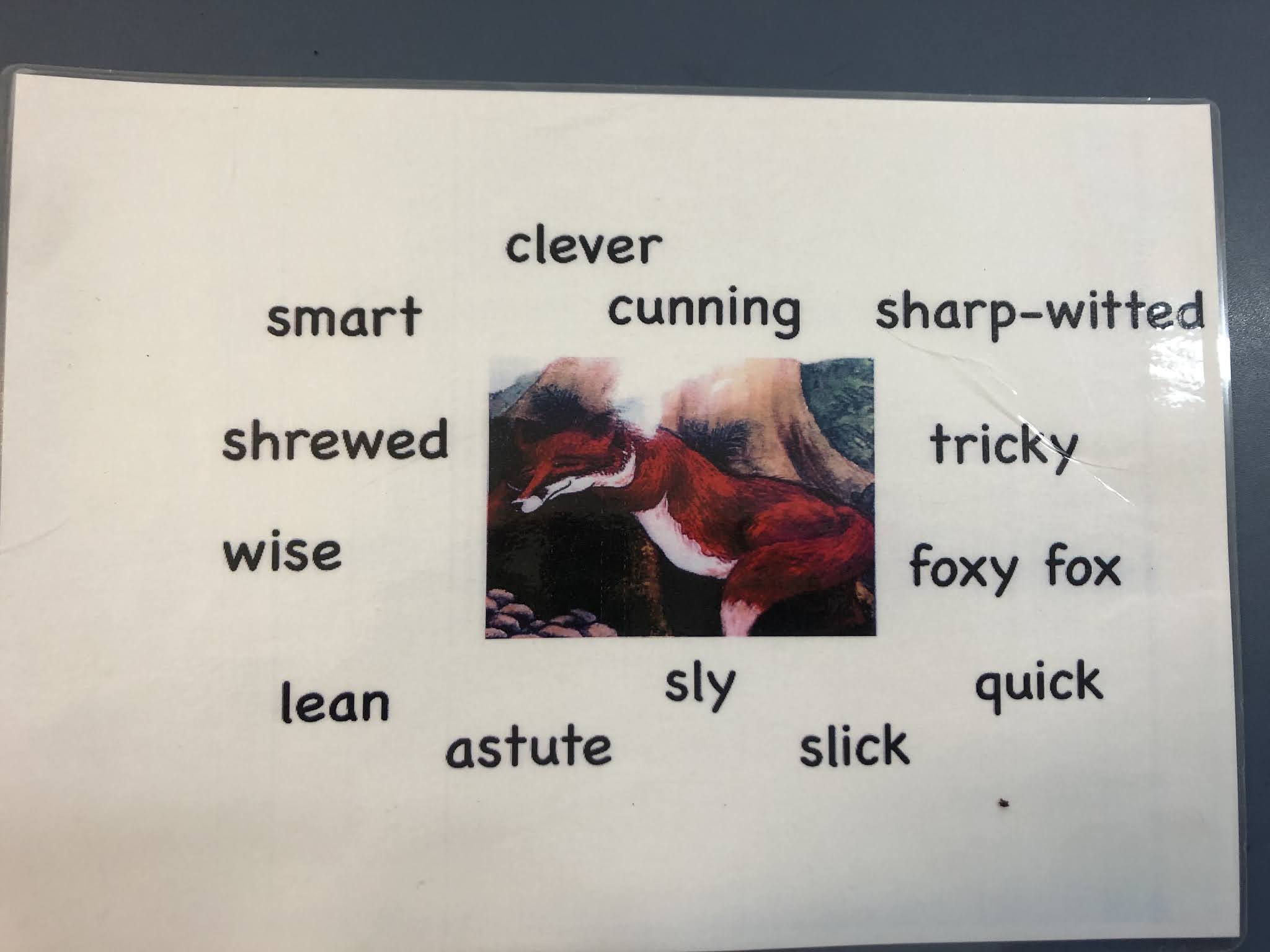
-I want to extend the writing by adding detail, topic related and interesting words- gifting vocabulary Jannie's programme.I want to use visual images and recycle the vocabulary, for example deep dark forest. sly sneaky fox. I will have to carefully choose images that will engage the learners, hook them into writing.

-Learn all the blends sounds and test and record scores.

- Start doing  simple spelling tests starting with 5 words  a week in Term 3. - this to to give students a challenge and for students to spell words "everyday used' fast and fluently, for examlple: friend with was saw because after etc.


Sunday, 16 May 2021

Inquiry Focus Term 1 2021

I have a lovely class of Year One students. All of the students started school last year so they all have a well developed idea of school and learning. They have formed some good relationships with each other because they have been in an open learning space environment in the previous year.


My inquiry will focus on the CoL Achievement Challenge:

#2. Lift the  achievement for boy's writing Years 1-10.


Inquiry Focus: My focus is on writing.

I will be working on building phonological awareness, teaching students how words work so that they can read and write efficiently.


I have 6 students in my focus group. They can identify high frequency words, some alphabet names and sounds.They have interesting ideas to share and can write a sentence with support.


Over the last few weeks I have been working on identifying letter sounds. During our writing

session we have been writing a dictated sentence. This is a simple sentence which includes

many high frequency words and just one or two unknown words.


Below is a presentation showing examples of the writing we have been doing thus far.

I have been using visual images to support the dictation which has been working

really well thus far.


What I have noticed:

I have noticed that I may need to change my writing programme as this does not cater for my higher ability and independent writers.

For the next few days I will be grouping the children in class according to their abilities and have a focus for each group.

Most of the children in my class have common confusions when identifying letter names, for example: d b p q w m letters sound confusions for c and s , g and j.


My focus for the next 5 weeks.

-Teach the mouth formation for each letter sound.

For Example,

When you say the sound for b your lips are together.

When you say the sound for d sound your lips are open and your tongue is on the roof of your mouth.

You can use a mirror so students can see their own gorgeous faces forming the correct sounds associated with each letter.

-Alphabet flashcards - focus on letter names and sounds for letters b d s c j g w m p q.


-Letter array- sorting letters into groups.


-Letter sorting.