Monday, 26 September 2022
Inquiry Focus Term 3 2022
Sunday, 8 August 2021
End of Term 2 Reflection
-We have been working on word families for eg. at family cat mat fat hat, the ay family way day may lay hay play, playing
- Word work-using known words to make other words for example, we he she me and my, by try fly shy
-Looking at blends wh th sh ch bl etc.
I have been using Elkonin boxes to help students develop phonemic awareness. The focus is on segementing and blending the sounds in words. Segmenting is breaking a word apart into individual sounds. Blending is putting the individual sounds together to say a word.
When students are writing and they attempt to write an unknown word they spend a long time sounding out the word and can't move on to the next word/part of their sentence.
What I would like add to my daily schedule to go over different phoenemic awareness activities and phonis skills and practise applying them.
The Phoenemic Awareness Activity:
Blending and segmenting different sounds.
When you want students to blend sounds together to make a word, they have to think of all the different parts of a word they're listening to and see how they come together to a make meaning.
I have to explicitly explain to children what we are learning to do:
1. They can blend syllables together:
Teacher says: I am going to give you 2 different syllables and you are going to put them together to make a word for example, pen cil makes pencil.
2. Blending sound:
- a. Blending onset+rime
Teacher says: We are going to practise blending sounds together to make a word.
Beginning and end of words, for example:
s un makes sun.
h ot makes hot.
- b. Blend all the sounds you can hear in the word.
For example:
h o t makes hot.
I will be doing all three activities each day for 5-10 minutes whilst children are eating their morning tea snack. By doing all three types of activities each day will help students understand the connection between letters, sounds, print and oral speaking. I hope to see a shift in both student's reading and writing results.
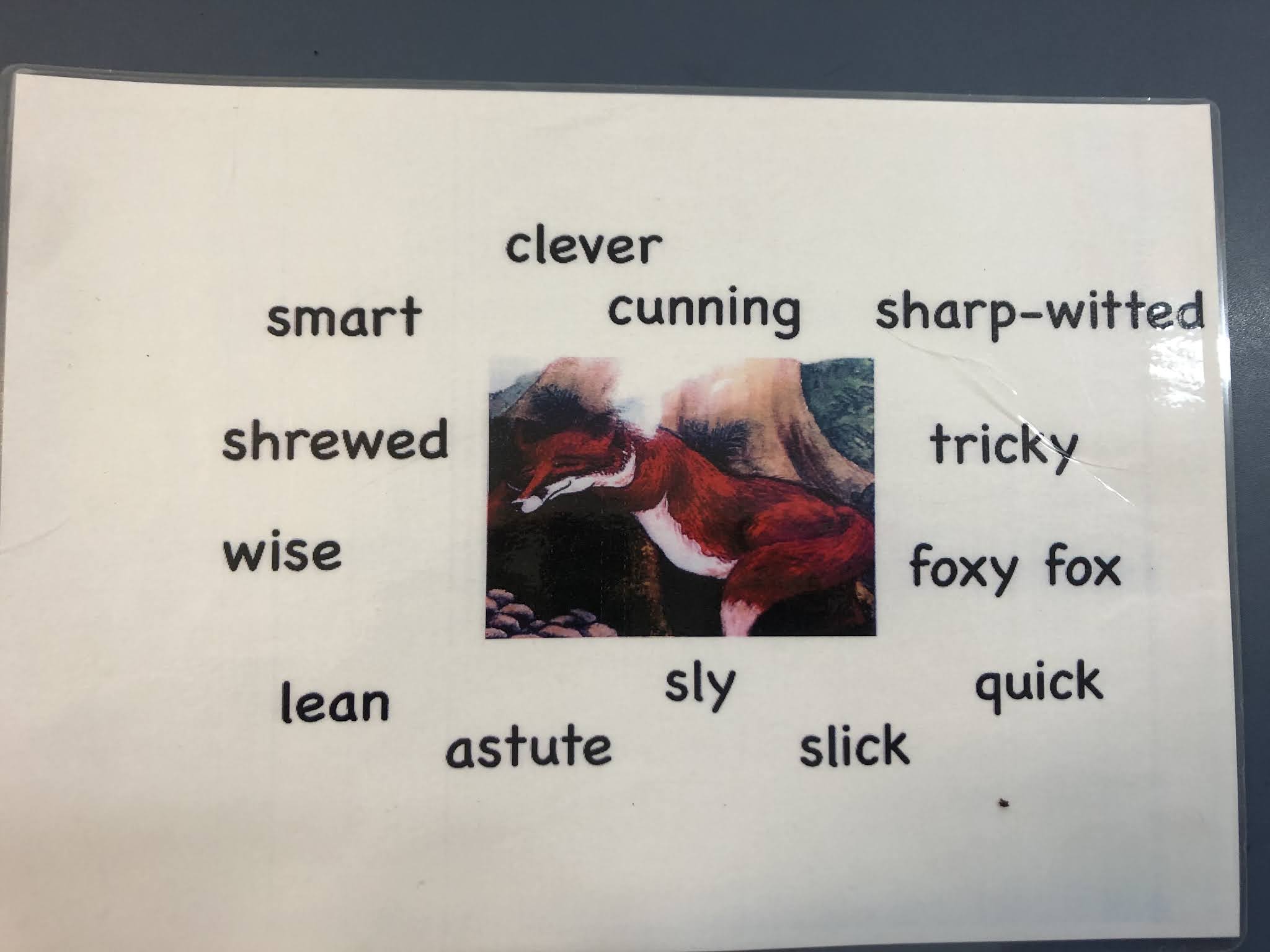
-I want to extend the writing by adding detail, topic related and interesting words- gifting vocabulary Jannie's programme.I want to use visual images and recycle the vocabulary, for example deep dark forest. sly sneaky fox. I will have to carefully choose images that will engage the learners, hook them into writing.
-Learn all the blends sounds and test and record scores.
- Start doing simple spelling tests starting with 5 words a week in Term 3. - this to to give students a challenge and for students to spell words "everyday used' fast and fluently, for examlple: friend with was saw because after etc.
Sunday, 16 May 2021
Inquiry Focus Term 1 2021
I have a lovely class of Year One students. All of the students started school last year so they all have a well developed idea of school and learning. They have formed some good relationships with each other because they have been in an open learning space environment in the previous year.
My inquiry will focus on the CoL Achievement Challenge:
#2. Lift the achievement for boy's writing Years 1-10.
Inquiry Focus: My focus is on writing.
I will be working on building phonological awareness, teaching students how words work so that they can read and write efficiently.
I have 6 students in my focus group. They can identify high frequency words, some alphabet names and sounds.They have interesting ideas to share and can write a sentence with support.
Over the last few weeks I have been working on identifying letter sounds. During our writing
session we have been writing a dictated sentence. This is a simple sentence which includes
many high frequency words and just one or two unknown words.
Below is a presentation showing examples of the writing we have been doing thus far.
I have been using visual images to support the dictation which has been working
really well thus far.
I have noticed that I may need to change my writing programme as this does not cater for my higher ability and independent writers.
For the next few days I will be grouping the children in class according to their abilities and have a focus for each group.
Most of the children in my class have common confusions when identifying letter names, for example: d b p q w m letters sound confusions for c and s , g and j.
My focus for the next 5 weeks.
-Teach the mouth formation for each letter sound.
For Example,
When you say the sound for b your lips are together.
When you say the sound for d sound your lips are open and your tongue is on the roof of your mouth.
You can use a mirror so students can see their own gorgeous faces forming the correct sounds associated with each letter.
-Alphabet flashcards - focus on letter names and sounds for letters b d s c j g w m p q.
Sunday, 6 December 2020
End of Year Reflection
Sunday, 20 September 2020
Inquiry Focus End of Term 3
On returning to alert Level 2. 5 not many of my students have come back to school. In saying that I am pleased that the children in my inquiry group have all been coming to school everyday. Student:TT and student TH joined the Google Meet Team sessions as well as accessed learning on the Class Site completing the lessons every single day. With their parents support at home they completed majority of the tasks on the slide deck as well as shared their learning by blogging their work. Student IM is very shy and found the meeting sessions overwhelming however completed all the learning tasks.
Over the past few weeks:
- I have been consistently using Gwenneth Phillips prompt by keeping it on my table so that when students made an error I could support them using that prompt.
- The students are beginning to make connections and this noticing, fixing, self correcting is used in other learning areas as well for eg, maths, writing, engage programme games,
-The voice recording of the lesson is a terrific idea as I can replay the lesson and plan accordingly.
- I have to write down the error made on a piece paper really quickly because at one stage as the child was checking I forgot the error was made by the child- so that did't go as expected however as he checked along with me he managed to self correct himself.
- The children have made progress in their reading as well as have confidence in themselves to have a go. give it a try before asking for help.
- I realised the importance of giving students time to work out the unknown word(waiting time). Students would look at me and I would quickly pretend to be busy doing something else. They had to think of strategies to read the unknown word- attempt themselves and most of the time they got it right. This in turn boosted their confidence and self esteem. It also. made me realise not to jump in too quickly to help the.
Next Steps:
-Woking on the next prompt of finding and fixing:
Thursday, 27 August 2020
Inquiry Focus Term 3
My inquiry focus has changed this term from the Engage Programme to a school wide focus on Reading.
My inquiry will focus on the CoL Achievement Challenge:
#3. Lift the achievement in Reading for all students, with a particular focus on boys and Maori students, with particular focus on boys and Maori students (both genders) Years 1-13.
The knowledge of phonics helps children to work out “ how to say the printed words”. In other words, it refers to the learners understanding which letter(s) make which sound. The learner can then use that knowledge and phonological awareness to encode(spell) and decode(read) regular words.This initial learning process is the building blocks or the foundation that children need to have to begin to read on their own and build their fluency and text comprehension.
This term our school wide focus is on Reading. The focus is to lift the achievement of students who are below the expected achievement level. Teachers have been given Professional Development (PD) to support us with this inquiry.
My Focus Group:
My focus group consists of three students,(student: T, student: KM, and student: IM). Student KM and IM started at the beginning of the year and the student T started school last year in October. They are all presently reading at Level Level 5 (Red 3).
What are my learners doing during our reading session?
I noticed that:
- Learners were engaged during the orienteering of the reader and were developing the confidence to share similar experiences as in the text. They would chat/discuss about what the picture “was telling us”
- When student IM and T would come to an unknown word they would look at only the initial letter and guess the word. Eg for home, they would look at the h sound and say here because the word here is a known word.
- All three students would sometimes just appeal or stare at me silently waiting for me to tell them the unknown word.
-When I was not looking they would skip that word and continue reading or sometimes make a few muffled sounds under their breath.
- They know most of the high frequency words and would look at the pictures to support them.
- They were confident and fluent in reading a familiar reader (previous day’s reader) and read that book with fluency.
-They have letter sound confusions for e.g. b and d confusions.
- Capital letter and little letter confusions for e.g when a sentence starts with a capital letter, And This, they are unable to read the word.
Working on over the next few weeks:
- Using Gwenneth Phillips Prompt consistently:
-I will use a voice recorder to record the reading lesson to get some input or understanding of what strategies children are using, listen to ‘what am I saying’ and then plan accordingly.
Tuesday, 10 March 2020
My Inquiry Focus for 2020
#5. Improve the achievement of students with additional needs in the learning areas of English/key competency using language symbols and texts.
The engage programme has three domains:
1. The Emotional (Feeling) Domain-RED
Recognising and regulating emotions, calming through breathing and movement, mindfulness.
2.The Cognitive (Thinking) Domain-Orange
Listening and playing attention, remembering instructions, blocking out distractions, fine and gross motor skills, controlling speed of movement, balance, etc.
3. The Behavioural Domain ( Doing) Domain- Green
Controlling impulses, patience, turn taking, delaying gratification.
I will be focussing on two of these domains looking at a group of children however the games will be played by everyone in the class as every child will benefit from these games. Two games are played for 10 minutes over a period of 4 weeks and them the students are assessed.
In Term One, Week 1-4 we played did:
Prompt-Things you can say:
This helps us control our breaths in and our breaths out."Big slow breathing can help us to feel calm and relaxed."
Deep Breathing
![]() |
| Smell the flower. (Breathe in slowly) |
![]() |
| Blow out the candle. (Breathe out slowly) |
A fun exercise that encourage children to tense and relax different parts of their bodies according to different instructions.
Prompt-Things you could say:
"We need to relax ourselves"
"We need to take big breathes when we relax"
"It helps us to feel calm"
What have I noticed:
Playing these games consistently do help children self regulate behaviour. They look forward to playing the games. Children are beginning to use the prompts with each other for example: when working in small groups I would hear a child saying " you need to wait for your turn." After lunch eating the children would come into class and find a spot and lie down to calm themselves down."
We were reading a the story called " The Three Billy Goats Gruff." We were discussing a part of the story and the meaning of bad-tempered troll" One children said " I think the troll is angry, maybe he needs to calm down and do breathing like us." The children are making connections which is pleasing to see.
Next steps:
I will introduce two new games for Weeks 5-8. I will continue to play the breathing and relaxation games especially after playtimes or when the need arises.